
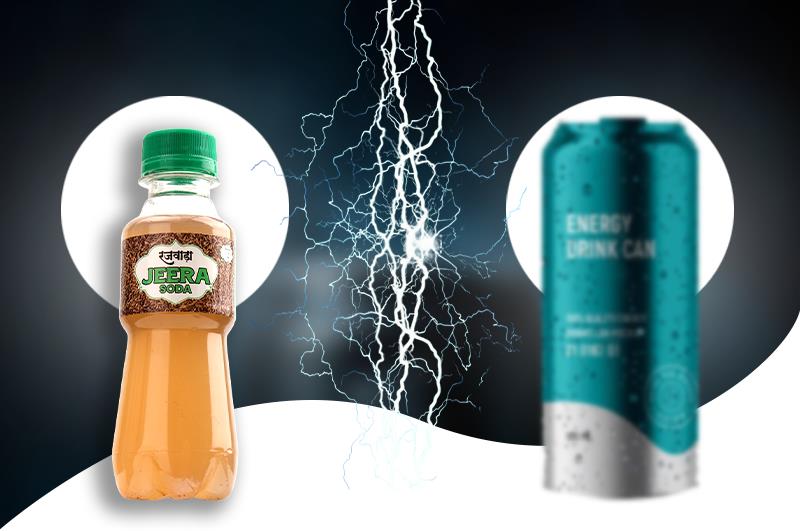
In today’s world, drinks like energy drinks and soda are everywhere. People of all ages enjoy them – from adults seeking a fizzy refreshment to students in need of a quick energy boost. But while both types of drinks may seem similar at first, they are very different in terms of ingredients, purpose, and health impact.
In this blog, let’s break down the main differences between energy drinks and soda drinks in a very simple and easy way so you can make smart choices for your health.
What Are Soda Drinks?
Soda drinks, also known as soft drinks, are sweet, carbonated beverages that come in many flavours. Common types include Jeera, Cola, Orange Lemon-lime, Mango, Litchi, and even fruit punches are common varieties. Most sodas are non-alcoholic and widely available in cans, bottles, and fountain machines.
Common Ingredients in Soda:
- Carbonated Water – gives soda its fizz
- Sugar or high fructose corn syrup – for sweetness
- Artificial flavours and colours
- Acids like citric or phosphoric acid – adds tanginess
- Caffeine (in some sodas)
Soda is usually consumed for refreshment, especially in summer, and is popular at parties, fast-food restaurants, and social gatherings.
What Are Energy Drinks?
Energy drinks are specially made to give a quick burst of energy. These drinks contain stimulants like caffeine, taurine, B vitamins, and sugar or sweeteners. They are mostly targeted towards athletes, students, gamers, or anyone needing an energy lift.
Common Ingredients in Ener gy Drinks:
- High levels of caffeine – more than soda
- Taurine – an amino acid that supports alertness
- Sugar or artificial sweeteners
- B vitamins – help boost metabolism
- Guarana or ginseng – natural stimulants
- Carbonated water
Key Differences Between Energy Drinks and Soda Drinks
Let’s look at how both these drinks compare:
| Feature | Soda Drinks | Energy Drinks |
| Purpose | Refreshment, taste | Boost energy, improve focus |
| Caffeine Content | Low (or none) | High (2x–3x more than soda) |
| Main Ingredients | Sugar, carbonation, flavour | Caffeine, taurine, vitamins, sugar |
| Effect on Body | Temporary refreshment | Stimulates the brain and body |
| Target Audience | All age groups | Teens, young adults, athletes |
| Regulation | Lightly regulated | More scrutiny due to high stimulants |
| Health Risks (if consumed too much) | Weight gain, tooth decay | Heart issues, anxiety, sleep problems |
How Do These Drinks Affect Your Health?
1. Energy Drinks – Powerful but Risky
Energy drinks may improve mental alertness and physical performance in the short term. But their high caffeine and sugar content can be harmful if consumed too often. People have reported side effects such as:
- Insomnia (trouble sleeping)
- Increased heart rate
- Anxiety and restlessness
- Headaches
- High blood pressure
- Dependency or addiction
Drinking more than one energy drink per day — especially for children, pregnant women, or people with heart conditions — is not recommended.
2. Soda Drinks – Fun but Not Always Healthy
Soda drinks may seem harmless, but most contain large amounts of added sugars and empty calories. Drinking soda regularly may lead to:
- Weight gain and obesity
- Tooth decay due to sugar and acidity
- Increased risk of type 2 diabetes
- Dehydration (especially with caffeinated sodas)
- Bone weakness (due to phosphoric acid)
Some sodas contain caffeine, but not as much as energy drinks.
Should You Choose Energy Drinks or Soda?
It depends on your need and your health.
Go for Soda if:
- You just want a chilled, tasty drink to refresh yourself.
- You’re in a social gathering or having a light meal.
- You prefer something mild and low in caffeine.
Choose Energy Drinks if:
- You’re feeling low on energy and need a quick boost.
- You’re preparing for a workout, exam, or long driving session.
- You can handle caffeine well and don’t have health concerns.
But in both cases — moderation is the key. These drinks are okay occasionally, but they should not replace water, milk, or fresh juices as your daily beverages.
Are There Any Healthy Alternatives?
Yes! Today, many people are switching to healthier options that are more natural and less harmful. Here are some alternatives:
- Flavoured Sparkling Water – Fizzy and refreshing with no sugar.
- Infused Water – Water with lemon, mint, or fruits.
- Coconut Water – Hydrating and rich in nutrients.
- Herbal Teas – Naturally caffeine-free and calming.
- Fresh Juices – Offer vitamins and antioxidants.
Conclusion
While energy drinks and soda drinks may look similar in a bottle or can, their ingredients and impact on your health are very different. Soda is usually enjoyed for its taste and fizz, while energy drinks are designed to give a strong energy boost. Both can be enjoyed in moderation, but excessive consumption of either can lead to health problems such as weight gain, sleep issues, or heart strain — especially due to high sugar or caffeine content.
The key is to understand your body’s needs and make smart choices. If you want something refreshing and light, a soda might work. If you need a quick lift for a workout or study session, an energy drink could help — but not every day.
Still, nothing beats natural hydration. Water, coconut water, and fresh juices are healthier, safer, and better for your body in the long run. Always choose what supports your well-being.